


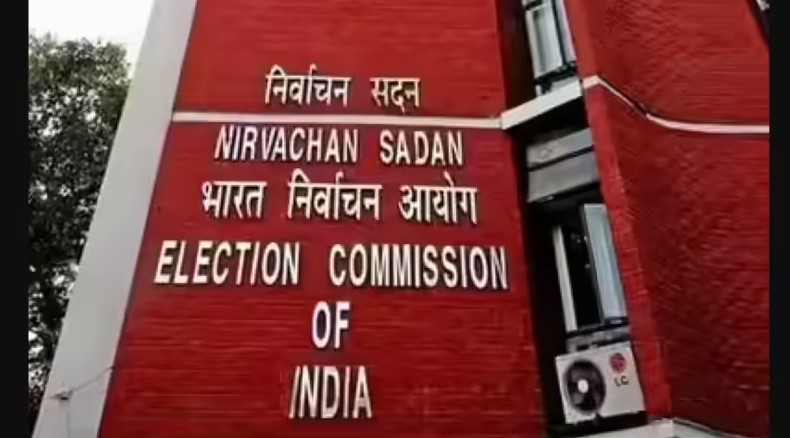
In a major administrative overhaul ahead of the 2026 Assembly elections, the Election Commission of India (ECI) on Tuesday ordered the immediate transfer of 19 senior police officers across West Bengal. This move, marking the third consecutive day of high-level reshuffles, aims to ensure administrative neutrality and a level playing field in a state known for its high-voltage political climate. Among the key appointments are Rajesh Kumar Singh and K. Jayaraman, both from the 1997 IPS batch, who have been named the new Additional Directors General (ADG) for the South Bengal and North Bengal regions, respectively. These regional heads play a pivotal role in supervising district-level security during the polling phases. The ECI’s directive also saw the replacement of Police Commissioners in four vital urban zones—Asansol-Durgapur, Howrah, Barrackpore, and Chandannagar—with officers Pranav Kumar, Akhilesh Kumar Chaturvedi, Amit Kumar Singh, and Sunil Kumar Yadav taking charge of these high-stakes commissionerates.
The reshuffle extended deep into the district administrations, with the poll body appointing 12 new Superintendents of Police (SPs) in critical areas including Birbhum, Cooch Behar, Malda, and Purba Medinipur. This sweeping action follows the Sunday announcement of the election schedule and the subsequent removal of the state’s Chief Secretary, Home Secretary, and Director General of Police. The ECI has invoked its constitutional powers under Article 324 to implement these changes, mandating that the transferred officers be kept entirely away from election-related duties until the completion of the polls on May 4. Chief Election Commissioner Gyanesh Kumar reiterated that the commission is “committed to holding transparent, fear-free, and violence-free elections,” emphasizing that such personnel shifts are standard procedure when concerns regarding bureaucratic neutrality arise.
However, the late-night nature of these orders has triggered a sharp political backlash from the ruling Trinamool Congress (TMC). Chief Minister Mamata Banerjee has vocally criticized the move, accusing the central body of acting at the behest of the BJP to destabilize the state administration. Despite the friction, the newly appointed officers were directed to assume their posts by 11 a.m. on Wednesday to ensure no vacuum in the law-and-order machinery as the state prepares for two-phase voting on April 23 and 29. With 478 central observers also being deployed to monitor each of the 294 constituencies, the 2026 West Bengal elections are shaping up to be one of the most strictly overseen democratic exercises in the country’s recent history.


+ There are no comments
Add yours